VPP Week-In-Review — Week of May 18, 2026
Your weekly brief on virtual power plants in the US & Canada.

Three Takeaways
PJM’s emergency data center curtailment powers unlocked data center flexibility during a possible emergency outside of any market participation.
In NERC’s summer reliability assessment, there are deeper concerns during the spring season with early summer heat and many power plants offline for spring maintenance.
The most operationally proven state-run VPP program in the country is heading toward elimination, and the ELRP fallback Governor Newsom is proposing is a structural downgrade for every aggregator operating in California.
News Roundup
Grid Reliability · 🟢 Bullish
DOE emergency order authorizes PJM to curtail data centers during heat-driven grid stress 📅 Published: May 19, 2026
DOE invoked emergency authority May 18 allowing PJM to curtail data centers with backup generation as a last resort after PJM flagged under 5,800 MW of reserves during an unseasonably hot peak, with Maryland and Virginia most stressed. The event required no VPP dispatch — but it is the clearest operational argument yet for why dispatchable behind-the-meter resources need market access before the next heat event, not after it.
Policy & Legislation · 🔴 Bearish
California’s signature VPP program faces a funding cliff as Newsom proposes eliminating DSGS in 2027 📅 Published: May 20, 2026
Gov. Newsom’s biennial budget zeroes out DSGS funding in 2027 and proposes shifting enrolled customers into utility-run ELRP — a transition clean energy groups call costly and counterproductive. DSGS dispatched 539+ MW average output over two hours during July 2025 test events, making it one of the most operationally proven consumer demand response programs in the country. The California Legislature must pass a budget by June 15 and finalize by August 31.
Research & Reports · 🟢 Bullish
Berg Insight: 13.9 GW of residential VPP capacity online in North America at end of 2025; 32M DERs connected by 2030 📅 Published: May 20, 2026
Berg Insight’s first-edition Residential Virtual Power Plant Software Market report puts 10.6 million residential DERs connected to VPP platforms in North America at end of 2025, representing 13.9 GW of flexible capacity — with smart thermostats the dominant asset class and home batteries and EV chargers accounting for smaller shares. The forecast to 2030 is 32 million DERs at an 18.1% CAGR, with Renew Home and EnergyHub ranked as the leading North American platforms by connected assets.
Research & Reports · 🟡 Neutral
NERC 2026 Summer Reliability Assessment: 58 GW added, but data-center demand forecasting problems grow 📅 Published: May 20, 2026
NERC added 58 GW of summer resource capacity to the bulk power system year-over-year and cut at-risk areas from six to four — but flagged data-center interconnection delays as a worsening demand forecasting problem that complicates operational planning. The deeper concern is during the spring season with early summer heat and many power plants offline for spring maintenance. NERC called out “widespread and unexpected” large load reductions and wind down ramp events in 2024–2025 as a growing reliability risk that adequate summer reserves don’t address.
Research & Reports · 🟢 Bullish
IESO 2026 Annual Planning Outlook projects 65% Ontario demand growth by 2050; DSM named a moderating force 📅 Published: May 20–22, 2026
IESO’s 2026 APO projects Ontario net annual energy demand growing 65% by 2050, driven by EVs, data centers, and electrification — and for the first time, the outlook explicitly names energy efficiency and demand-side management programs as a structural moderating force on load growth. IESO ran stakeholder engagement on the APO this week (May 20–22), with a new addition this year: high/low demand scenarios alongside the reference case, giving DSM advocates more surface area to make the load-flexibility argument.
Research & Reports · 🟢 Bullish
SEPA/NCCETC Q1 2026 VPP Policy Update: Two states pass VPP legislation, Massachusetts sets 3.5 GW load-management target 📅 Published: May 13, 2026 (published just before this week’s window — included given the June 1 Illinois deadline)
Q1 2026 saw two states enact VPP legislation, Massachusetts set a 3.5 GW load-management target, and Minnesota greenlight Xcel’s $430M CapacityConnect program. Illinois’s CRGA VPP tariff — the first formal third-party aggregator framework in the state — hits its June 1 implementation deadline this week, making the Q1 state policy sweep directly relevant to practitioners tracking where the next aggregator opportunity opens.
Regulatory & FERC · 🔴 Bearish
FERC RM21-14 withdrawal takes effect, preserving state veto over third-party aggregators 📅 Published: May 21, 2026
FERC’s April 16 termination of RM21-14 became legally effective May 21, locking in states’ authority to block third-party aggregator bids from RTO/ISO markets — covered in depth in the April 20 issue.
📊 By the Numbers
13.9 GW (Berg Insight) — Total flexible capacity of residential DERs connected to VPP platforms in North America at end of 2025, across 10.6 million connected assets.
32M (Berg Insight) — Residential DERs forecast to be connected to VPP platforms in Europe and North America by 2030, an 18.1% CAGR from current levels.
539+ MW (Utility Dive) — Average DSGS dispatched output over two hours during July 2025 test events, the program Newsom’s 2027 budget would eliminate.
<5,800 MW (Utility Dive) — PJM reserve margin during the May 18 heat peak, the threshold that triggered DOE emergency authority.
58 GW (Utility Dive) — New summer resource capacity added to the bulk power system year-over-year, per NERC’s 2026 Summer Reliability Assessment.
65% (IESO) — Projected Ontario net energy demand growth by 2050, per IESO’s 2026 Annual Planning Outlook.
🗓️ On the Radar
June 1, 2026 (SEPA/DSIRE) — Illinois CRGA VPP tariff deadline; the first formal aggregator tariff framework in the state reaches its implementation milestone.
June 2026 — FERC expected to act on RM26-4 (large load interconnection rulemaking), which FERC commissioners have explicitly flagged as intersecting with DR and load flexibility as alternatives to costly transmission buildout.
June 15, 2026 (Utility Dive) — California Legislature must pass its budget; DSGS 2027 fate expected to crystallize.
August 31, 2026 (Utility Dive) — California budget finalization deadline; final DSGS/ELRP transition decision confirmed.
💬 My Take
This spring is an unusually early start to the demand response season, especially in PJM and NY. I forecast that we are going to continue to see increased dispatching through the spring for VPPs as a result. And some of the fallout will lead to more data center developers and operators planning to be flexed for grid reliability.
Historically the summer season really kicks off in July and goes through September in much of the country. This year it starts in May. And there are structural reasons related to weather, power plant planned maintenance, and data center load drops that are driving this need. Let me start with the signals I’m seeing:
Last week NERC flagged that early heat in the spring, planned maintenance for a number of power plants make this time a high risk period for the grid. They noted March was the hottest on record for the last 132 years in the contiguous United States. NERC noted there are longer maintenance windows in the Western United States due to “limited availability of engineering, procurement, and construction contractors.”
NERC also flagged New England’s decreased firm imports by 836 MWs from last year. This lowers the Anticipated Reserve Margins this summer to 14%, 1% above NERC’s reference level. This could push ConnectedSolutions dispatches to start in the first half of June rather than July.
In parallel PJM got emergency powers from DOE to require data centers to run their backup generators through May 20th given the early heat, forecasted peak loads and 40 GWs of power plant outages. PJM did not need to activate this power and was instead able to use the traditional demand response resources across four utility territories.
In April NYISO issued a projected reliability shortfall of 1,679 MWs during a 3-day heat wave above 95 degrees in New York City for this summer.
And May 5th NERC issued a level 3 reliability alert due to data centers’ sudden load loss. This could trip voltage sensitivities on the grid without ancillary services support.
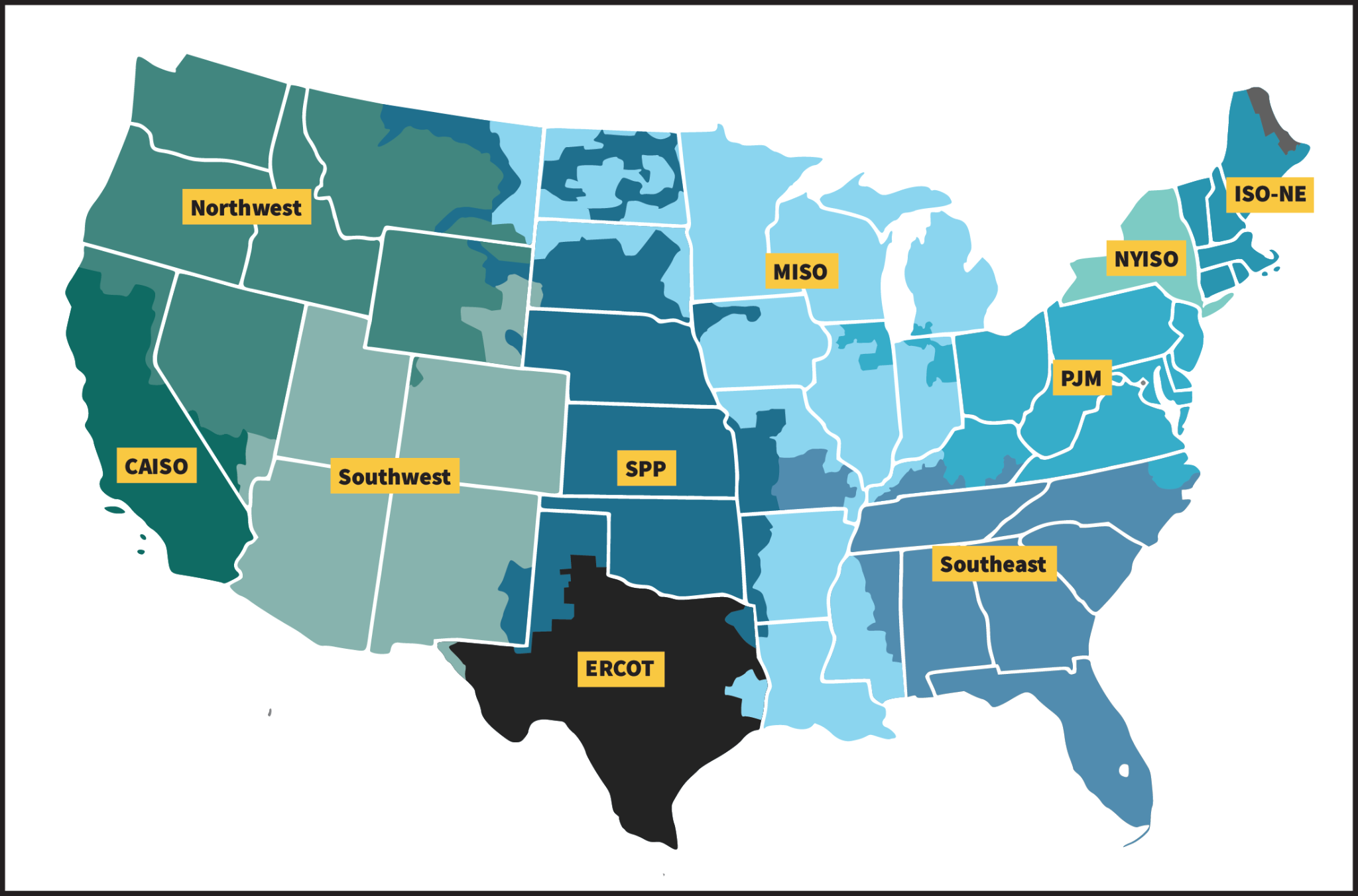
The PJM emergency power from DOE is another signal that any new data center should plan to be shut off even if they aren’t on a base interruptible tariff today. PJM is not a one-off example: Texas has codified new data center shutoffs during emergencies into law under Texas Senate Bill 6 in June of 2025. Both the emergency order and SB6 create a mechanism to drop data center load that can be triggered during an emergency.
SPP is pushing forward with an interruptible tariff framework called CHILLS (Conditional High Impact Large Load Service) for sites that can’t yet be serviced with a firm transmission service. In this scenario they are able to interconnect earlier. In exchange the site has non-firm service for up to five years while system upgrades are completed.
As other regions experience significant data center load growth, I would expect legislation mandating dropping data center load during an emergency, interruptible tariffs or fast track for curtailable load to be mirrored by other states and markets. All of these examples point to a future where data center flexibility is brought to the grid for emergency events outside of markets or utility programs. This could pose a challenge for aggregators unless they can support data centers coming online faster through Bring-Your-Own-Distributed-Capacity (discussed in detail last week).
I have previously thought of flexibility coming from three primary sources:
tariffs like interruptible tariffs, time of use and demand charges
wholesale market demand response participation
utility programs.
I now see another avenue - mandatory flexibility that is not compensated in markets, but may be compensated through earlier interconnection.
What Did I Miss — or Get Wrong?
Spot a story that should have been in this week’s issue? Disagree with the way I’m interpreting the facts? Just comment in notes with a link to the story or your take.
Opinions are my own and not the views of my employer. Research and drafting for this issue was produced with the assistance of Claude AI. All editorial decisions are mine.